Tucumán Coin List
Argentina-Provinces | 2 reals
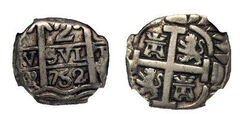
The most valuable and popular coins
The most valuable Tucumán coins and sought after by collectors according to Foronum statistics are the following:

Historical information
The monetary history of Tucumán during the period of the United Provinces of the Río de la Plata is a fascinating chapter in Argentine numismatics. This region, known for its importance in the struggle for independence, also left its mark in the economic sphere through its local coinage.
The historical context and the first issues
After the May Revolution of 1810, Tucumán became a strategic center for the independence cause. The need to finance the military campaigns and the scarcity of circulating currency led the province to issue its own coins. In 1820, under the government of Bernabé Aráoz, the first coins known as "Federales" were minted. These coins, made of copper and with rudimentary designs, had the initials "F.P.T." (Federación de la Provincia de Tucumán) on the obverse and the face value on the reverse. The issuance of these pieces not only sought to solve local economic problems, but was also an affirmation of provincial autonomy in a context of internal struggles.
Characteristics and numismatic legacy
The Tucuman coins of this period are characterized by their handmade manufacture and their variety of dies. In addition to the "Federales", other denominations were issued, such as the "cuartillos" and the "octavos". The quality of these pieces was variable, reflecting the technical limitations of the time and the urgency of their production. Despite their short circulating life, these coins are today highly valued by collectors and scholars of Argentine numismatics. They represent a tangible testimony of a crucial period in the formation of the Argentine state, where each province fought for its recognition and autonomy. The study of these coins not only provides valuable information on the local economy of Tucumán in the 19th century, but also sheds light on the complex political and social processes that shaped modern Argentina.