1st Republic (1918-1938) Coin List
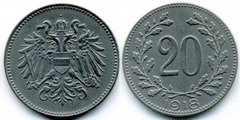
Austria | 20 heller
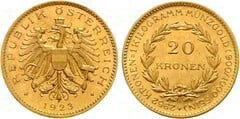
Austria | 20 kroner
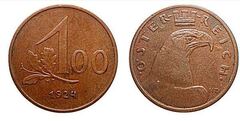
Austria | 100 kroner
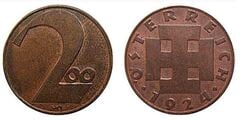
Austria | 200 kroner
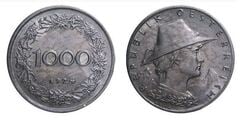
Austria | 1.000 kroner
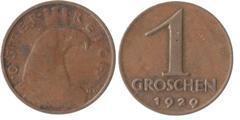
Austria | 1 groschen
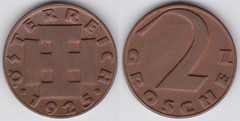
Austria | 2 groschen
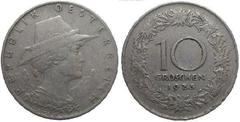
Austria | 10 groschen
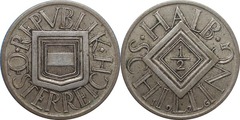
Austria | 1/2 schilling
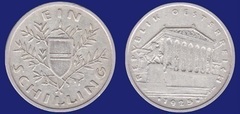
Austria | 1 schilling
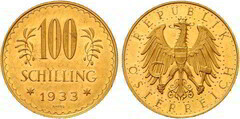
Austria | 100 schilling
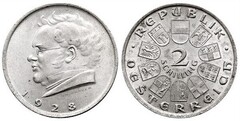
Austria | 2 schilling (100th Anniversary of the Death of Franz Schubert)
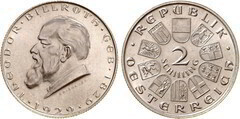
Austria | 2 schilling (Centenary of the Birth of Theodor Billroth)
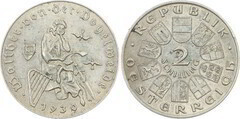
Austria | 2 schilling (700th Anniversary of the Death of W. v/d Vogelweide)
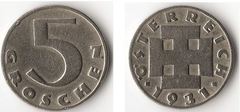
Austria | 5 groschen
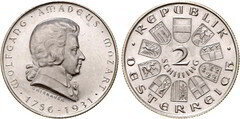
Austria | 2 schilling (175th Birthday Anniversary of Wolfgang A. Mozart)
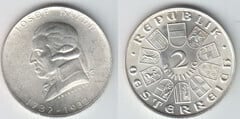
Austria | 2 schilling (Bicentenary of the Birth of Joseph Haydn)
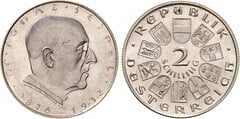
Austria | 2 schilling (Death of Dr. Ignaz Seipel)
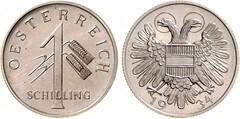
Austria | 1 schilling
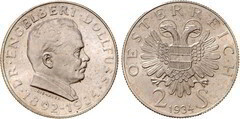
Austria | 2 schilling (Death of Dr. Engelbert Dollfuss)
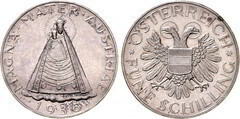
Austria | 5 schilling (Madonna of Mariazell)
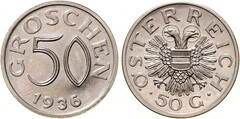
Austria | 50 groschen
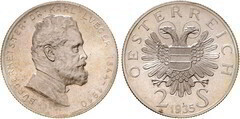
Austria | 2 schilling (25th Anniversary of Karl Lueger's Death)
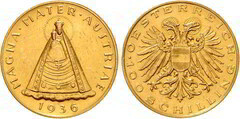
Austria | 100 schilling (Madonna of Mariazell)
Austria | 2 schilling (Bicentennial of the Death of Prince Eugene of Savoy)
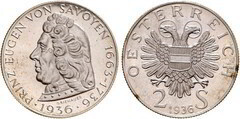
The most valuable and popular coins
The most valuable 1st Republic (1918-1938) coins and sought after by collectors according to Foronum statistics are the following:

Historical information
The First Republic of Austria, established after the dissolution of the Austro-Hungarian Empire in 1918, marked a period of transition and challenges for the nation. During these two decades, Austria underwent significant changes in its political and economic system, reflected in its monetary system and coinage.
Historical and economic context
After World War I, Austria faced a severe economic crisis and the loss of much of its territory. Hyperinflation in the early 1920s led to the introduction of the Austrian schilling in 1925, replacing the Austro-Hungarian krone. This new currency symbolized an attempt to stabilize the economy and mark a new era for the country. However, the Great Depression of 1929 hit Austria hard, leading to a banking crisis in 1931 and a period of economic stagnation that persisted until the Anschluss of 1938.
Coins of the First Republic
The coins of the First Republic reflected the Austrian national identity and its changing economic situation. Early issues included bronze and nickel coins with groschen and schilling denominations. They featured designs depicting national symbols such as the Austrian federal eagle and allegorical figures of the republic. As the economic situation deteriorated, commemorative silver coins were introduced to attract investment and stimulate the economy. These pieces, such as the 1928 silver schilling commemorating the centenary of Franz Schubert, are now coveted by collectors. The quality and design of these coins reflect the rich Austrian numismatic tradition, which continued despite the economic difficulties of the period.