Colonial Period Coin List
Chile | 8 escudos (Ferdinand VI)
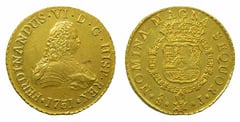
Chile | 8 escudos (Charles IV)
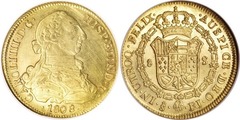
Chile | 1/2 real (Ferdinand VII)
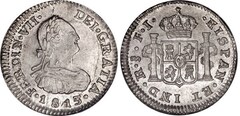
Chile | 1 real (Ferdinand VII)
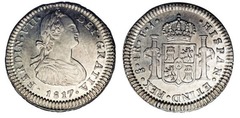
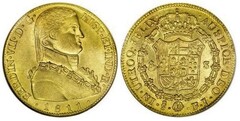
Chile | 8 escudos (Ferdinand VII)
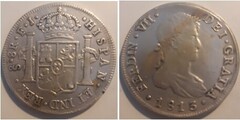
Chile | 8 reales (Ferdinand VII)
The most valuable and popular coins
The most valuable Colonial Period coins and sought after by collectors according to Foronum statistics are the following:

Historical information
The Colonial Period in Chile, which lasted from the arrival of the Spanish in 1541 until independence in 1817, was a time of profound economic and social changes. During this time, currency played a fundamental role in the development of the colony, reflecting the economic policies of the Spanish Crown and the particularities of the region.
Colonial Monetary System
The monetary system in colonial Chile was based on the Spanish model, using mainly silver coins and, to a lesser extent, gold coins. The most common denominations were the real de a ocho, also known as peso, and its fractions. Initially, most of the coins came from the mints of Potosí and Lima, but in 1749 the Santiago Mint was established, which allowed local minting. These coins, known as "Chilean Colonials", had the coat of arms of the Spanish Crown on the obverse and the Pillars of Hercules, symbol of the Spanish Empire, on the reverse.
Economic and social impact
The circulation of currency in colonial Chile had a profound impact on the economy and society. It facilitated internal and external trade, allowing Chile to participate more actively in the economy of the Spanish empire. However, chronic currency shortages were a persistent problem, especially in rural areas, leading to the frequent use of barter and alternative forms of payment such as hacienda tokens. Towards the end of the colonial period, political and economic instability was reflected in the quality and quantity of circulating currency, with emergency issues and the appearance of countermarks on existing coins, anticipating the changes that would come with independence in 1817.