Hesse Coin List
Germany-States | 1 silbergroschen
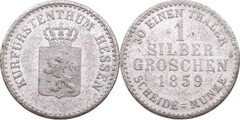
The most valuable and popular coins
The most valuable Hesse coins and sought after by collectors according to Foronum statistics are the following:

Historical information
The Landgraviate of Hesse, a historic region in the heart of Germany, played a crucial role in the monetary and political evolution of Central Europe during the 16th to 19th centuries. Its monetary system reflected the complexity of the German states of the time, with a diversity of coinage that testifies to its cultural and economic richness.
The monetary system of Hesse
The Hessian monetary system was characterized by its diversity and complexity. The landgraves of Hesse minted a wide variety of coins, from small copper denominations to large silver and gold pieces. Among the most notable coins were silver thalers, which became an important trade coin throughout Europe. These pieces often featured detailed portraits of Hessian rulers and complex heraldic symbols, reflecting the pride and authority of the ruling house. The quality of Hessian coinage was generally high, which contributed to its acceptance beyond the borders of the landgraviate.
Political and economic influence
Hesse's strategic position in central Germany gave it significant influence in the political and economic affairs of the region. Hessian coins served not only as a medium of exchange, but also as tools of political propaganda and assertion of sovereignty. During the Reformation period, Hesse became a bastion of Protestantism, and this was reflected in some of its coinage that included religious motifs and mottos. Hesse's economic stability, backed by its sound monetary system, allowed it to maintain an influential position even during periods of turbulence in the Holy Roman Empire. Over time, different branches of the house of Hesse (such as Hesse-Kassel and Hesse-Darmstadt) developed their own monetary systems, adding further layers of complexity to the already rich numismatic history of the region.