Reform Era (1872-1893) Coin List
Guatemala | 1/4 real
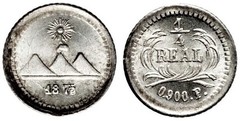
Guatemala | 1/2 real
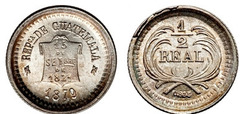
Guatemala | 4 reales
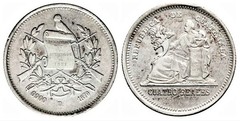
Guatemala | 1/4 real
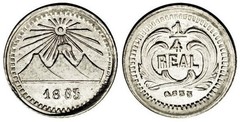
Guatemala | 1/2 real
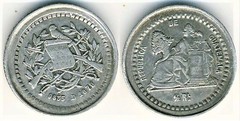
Guatemala | 2 reales
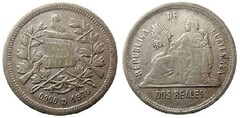
Guatemala | 1/4 real
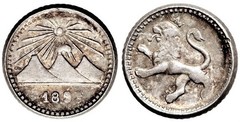
Guatemala | 1/2 real
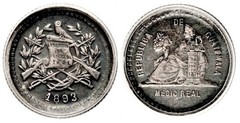
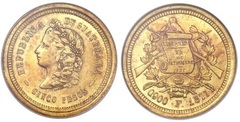
Guatemala | 5 pesos
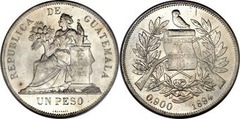
Guatemala | 1 peso
The most valuable and popular coins
The most valuable Reform Era (1872-1893) coins and sought after by collectors according to Foronum statistics are the following:

Historical information
The Reform Era in Guatemala, which lasted from 1872 to 1893, was a period of profound political, economic and social changes. During this time, the country underwent important transformations that were also reflected in its monetary system and in the currencies that circulated in the Central American nation.
Political and economic reforms
Under the leadership of Justo Rufino Barrios, Guatemala implemented a series of liberal reforms that sought to modernize the country. Secular education was promoted, the power of the Church was limited and foreign investment was encouraged. In the economic sphere, coffee production and exports were promoted, which required a modernization of the monetary system. In 1870, the Guatemalan peso was officially adopted as the monetary unit, replacing the old real. The new coins, minted in silver and gold, featured national symbols such as the quetzal and reflected the reformist government's aspiration for progress.
Evolution of the monetary system
During the Reform Era, Guatemala experienced a transition in its monetary system. Initially, the decimal system inherited from the colonial era continued to be used, but with denominations in pesos and centavos. In 1881, the first modern mint was established in Guatemala, allowing for more efficient local production. Coins from this period are particularly interesting to numismatists, as they reflect the evolution of minting design and technology. Silver coins were issued in denominations of 1, 2, 4 and 8 reales, as well as gold coins of 1, 2, 4 and 8 escudos. Towards the end of the era, in 1892, the silver peso was introduced, which would be the basis for the subsequent adoption of the quetzal as the national currency in 1925.