Republic (1970-1980) Coin List
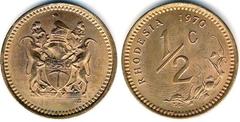
Rhodesia | 1/2 cent
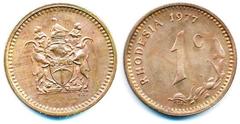
Rhodesia | 1 cent
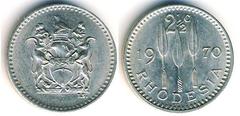
Rhodesia | 2 1/2 cents
Rhodesia | 5 cents
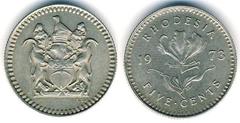
Rhodesia | 5 cents
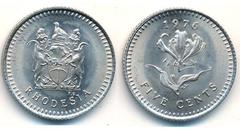
Rhodesia | 10 cents
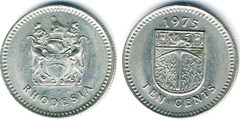
Rhodesia | 20 cents
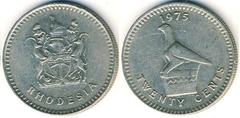
Rhodesia | 25 cents
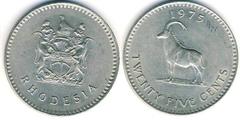
The most valuable and popular coins
The most valuable Republic (1970-1980) coins and sought after by collectors according to Foronum statistics are the following:

Historical information
The Republic of Rhodesia, which existed between 1970 and 1980, was a turbulent period in the history of present-day Zimbabwe. During this decade, the country experienced significant changes in its political and economic structure, reflected in its monetary and numismatic system.
Historical and political context
In 1970, Rhodesia declared itself a republic, definitively breaking its ties with the British Crown. This movement was led by Ian Smith's government, which sought to maintain the control of the white minority over the country. During this decade, Rhodesia faced international sanctions and a growing guerrilla war by African nationalist movements. These conflicts had a direct impact on the country's economy and thus on its monetary system. Despite the difficulties, the Rhodesian government tried to project an image of stability and sovereignty through its currency, the Rhodesian dollar, which replaced the Rhodesian pound in 1970.
Coins of the Republic of Rhodesia
The monetary system of the Republic of Rhodesia was based on the Rhodesian dollar, divided into 100 cents. The coins issued during this period reflected the identity and aspirations of the regime. Coins of 1, 5, 10, 10, 20 and 25 cents, as well as 1 dollar, were minted. These pieces featured designs that highlighted local fauna and flora, such as the black saber on the 20 centavo coin and the aloe on the 1 centavo coin. National symbols such as the Rhodesian coat of arms were also included on the $1 coin. The mintage quality was high, using copper-nickel alloys for most denominations. These coins not only served as a medium of exchange, but were also a propaganda tool of the regime, projecting an image of normality and legitimacy in a context of international isolation.