House of Bourbon (1700-1868) Coin List
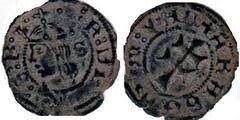
Spain | 1 dinero (Charles III Pretender)
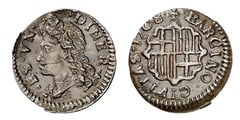
Spain | 1 ardite - Barcelona (Archduke Charles)
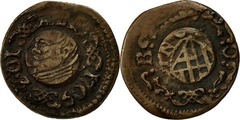
Spain | 2 reales (Archduke Charles)
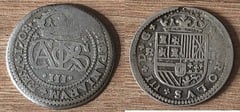
Spain | 2 maravedíes (Charles II)
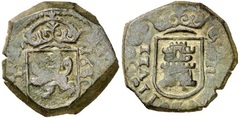
Spain | 2 maravedíes (Charles II)
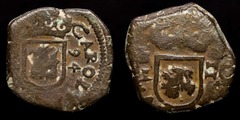
Spain | 1 quarto
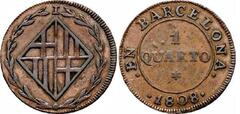
Spain | 2 cuartos (Joseph I Bonaparte)
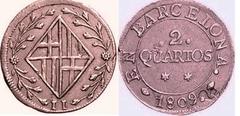
Spain | 4 cuartos (Joseph I Bonaparte)
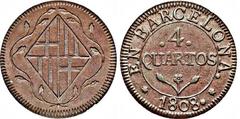
Spain | 2 1/2 pesetas (Joseph I Bonaparte)
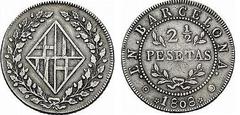
Spain | 5 pesetas (Joseph I Bonaparte)
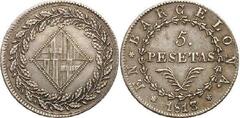
Spain | 1 peseta (Joseph I Bonaparte)
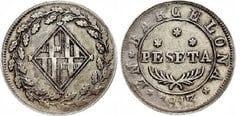
Spain | 1/2 cuarto (Joseph I Bonaparte)
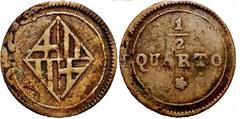
Spain | 3 cuartos (Ferdinand VII)
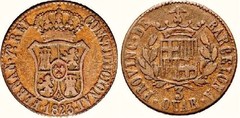
Spain | 1 real (2 reales de vellón - Fernando VII)
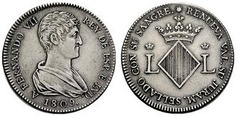
Spain | 6 cuartos (Ferdinand VII)
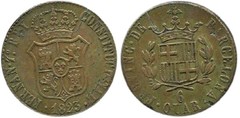
Spain | 2 reales (4 reales de vellón - Fernando VII)
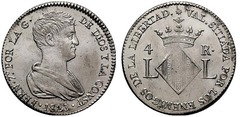
Spain | Ardite de Segovia
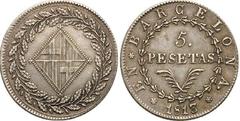
Spain | 5 pesetas (Napoleon)
Spain | 12 diners
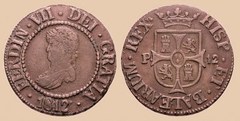
Spain | 3 cuartos - Cataluña (Ferdinand VII)
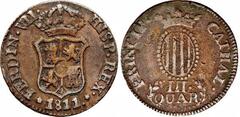
Spain | 6 cuartos - Cataluña (Ferdinand VII)
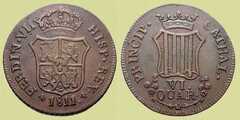
Spain | 1 1/2 cuartos - Cataluña (Ferdinand VII)
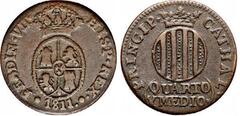
Spain | 1 ochavo - Cataluña (Ferdinand VII)
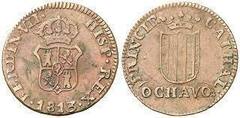
Spain | 1 cuarto - Cataluña (Ferdinand VII)
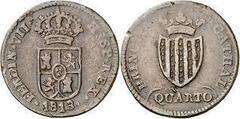
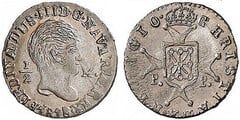
Spain | 1/2 maravedi - Navarra (Ferdinand III)
The most valuable and popular coins
The most valuable House of Bourbon (1700-1868) coins and sought after by collectors according to Foronum statistics are the following:

Historical information
The House of Bourbon in Spain, which reigned from 1700 to 1868, marked an era of important changes in the country's history and numismatics. During this period, significant monetary reforms took place that reflected the political and economic transformations of the nation.
Monetary reforms and new coinage
With the arrival of Philip V to the Spanish throne, a series of reforms in the monetary system began. The real de a ocho was introduced as the main currency, which later became the silver peso. This coin gained great popularity and was widely used in international trade. In addition, new gold coins were minted, such as the escudo and its multiples. During the reign of Charles III, an important monetary reform was carried out in 1772, which established the real de vellón as the unit of account and created new denominations such as the real de a dos and the real de a cuatro.
Evolution of designs and mints
The designs of the Bourbon coins underwent a remarkable evolution throughout this period. Initially, the coins showed the royal coat of arms on the obverse and a cross on the reverse. However, with Charles III, the portrait of the monarch was introduced on the obverse, a practice that would continue with his successors. The most important mints during this period were Madrid, Seville and Segovia in the peninsula, while in America the most important mints were those of Mexico, Lima and Potosi. The quality of the coinage improved significantly, especially with the introduction of mechanical minting and the adoption of the cordoncillo on the edges of the coins to prevent clipping.