Second Republic (1931-1939) Coin List
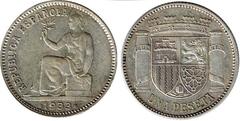
Spain | 1 peseta (II Republic)
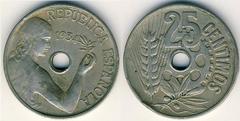
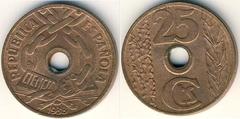
Spain | 25 céntimos (II Republic)
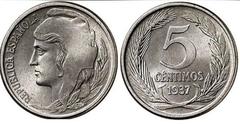
Spain | 5 céntimos (II Republic)
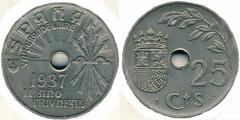
Spain | 25 céntimos (2nd Triumphal Year)
Spain | 50 céntimos (II Republic)
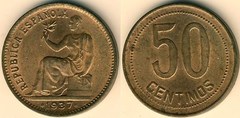
Spain | 50 céntimos (II Republic)
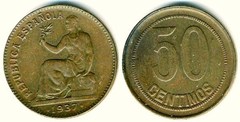
Spain | 1 peseta (II Republic)
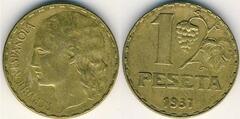
Spain | 10 céntimos (II Republic)
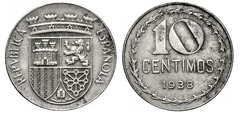
Spain | 25 céntimos (II Republic)
The most valuable and popular coins
The most valuable Second Republic (1931-1939) coins and sought after by collectors according to Foronum statistics are the following:

Historical information
The Second Spanish Republic, which lasted from 1931 to 1939, was a period of profound political, social and economic changes in Spain. During this period, important transformations took place in several areas, including the country's monetary system.
Historical context and monetary reforms
The proclamation of the Second Republic on April 14, 1931 marked the beginning of a new era in Spanish history. The republican government faced numerous challenges, among them the need to modernize and stabilize the country' s economy. In this context, several monetary reforms were carried out, one of the most significant being the introduction of the republican peseta in 1933. This new currency sought to reflect the values and ideals of the new regime, moving away from the monarchical symbols that had predominated until then. Coins of various values were minted, from 1 cent to 5 pesetas, with designs that included allegories of the Republic, historical figures and motifs related to agriculture and industry.
Characteristics and evolution of Republican coins
The coins of the Second Republic were characterized by their diversity and symbolic richness. Among the most outstanding were the 1 peseta silver coin, which showed a seated matron representing the Republic, and the 25 cent cupro-nickel coin, with the effigy of a woman wearing a Phrygian cap. As the 1930s progressed, political and economic instability affected coin production and circulation. With the outbreak of the Civil War in 1936, the monetary situation became even more complex, with the issuance of emergency coins by local governments and the parallel circulation of coins in the Republican and National zones. This turbulent period culminated with the end of the Republic in 1939, also marking the end of its monetary system, which today is of great interest to collectors and historians for its historical and numismatic significance.