Ticino Coin List
Swiss cantons | 6 denari
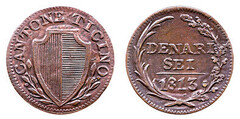
Swiss cantons | 6 denari
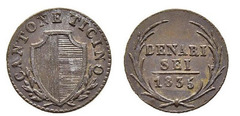
Swiss cantons | 6 denari
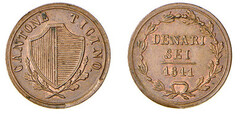
Swiss cantons | 3 soldi (with star variety)
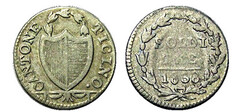
Swiss cantons | 3 soldi (No star variety)
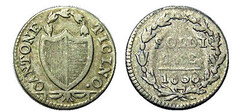
Swiss cantons | 1 franco
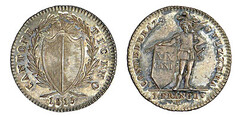
Swiss cantons | 2 franchi
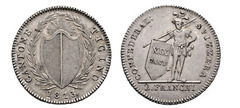
Swiss cantons | 3 denari
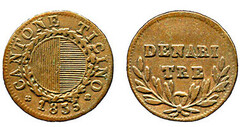
Swiss cantons | 4 franchi
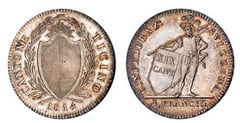
Swiss cantons | 1 quarto franco
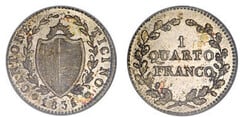
Swiss cantons | 1 mezzo franco
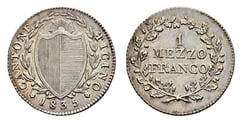
Swiss cantons | 3 denari
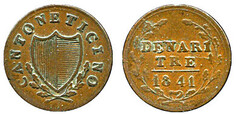
The most valuable and popular coins
The most valuable Ticino coins and sought after by collectors according to Foronum statistics are the following:

Historical information
Canton Ticino, located in southern Switzerland, has a rich numismatic history that reflects its unique position as a bridge between Italian and Swiss cultures. For centuries, Ticino has witnessed a fascinating evolution in its monetary systems, from medieval times to the modern era.
Ticino's monetary system before Swiss unification
Before the unification of Switzerland in 1848, Ticino, like other cantons, issued its own coins. Ticino's monetary system was strongly influenced by Italian practices due to its geographical and cultural proximity. The most common coins were the scudi, lire and soldi, which circulated alongside coins from other Swiss cantons and neighboring Italian states. This period was characterized by great monetary diversity, which often complicated trade and financial transactions. Ticino coins from this era are particularly valued by collectors due to their rarity and unique designs that often incorporated local and heraldic symbols.
The transition to the unified Swiss currency
The unification of Switzerland in 1848 marked a turning point in Ticino's monetary history. The canton, along with the rest of Switzerland, adopted the Swiss franc as its official currency. This change brought much-needed standardization, facilitating trade and strengthening national identity. However, the transition was not immediate. For a period, the old Ticino coins continued to circulate alongside the new Swiss franc, creating a fascinating period of monetary coexistence. Coins minted in Ticino during this transitional period are particularly interesting to numismatists, as they represent a bridge between two monetary eras. These pieces often combined elements of traditional Ticino design with the new Swiss franc specifications, creating unique coins that capture a pivotal moment in the canton's economic history.