French Protectorate (1881-1956) Coin List
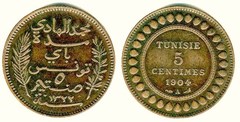
Tunisia | 5 centimes
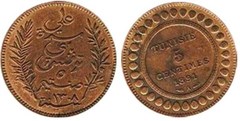
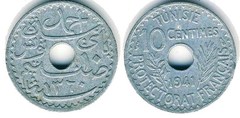
Tunisia | 10 centimes
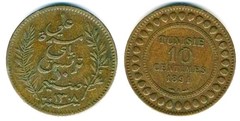
Tunisia | 50 centimes
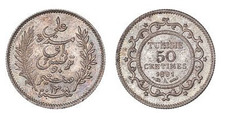
Tunisia | 1 franc
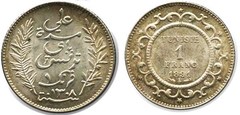
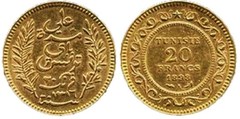
Tunisia | 20 francs
Tunisia | 5 centimes
Tunisia | 10 céntimos
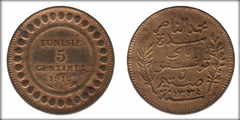
Tunisia | 5 centimes
Tunisia | 10 centimes
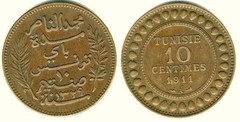
Tunisia | 50 centimes
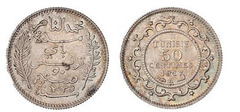
Tunisia | 2 francs
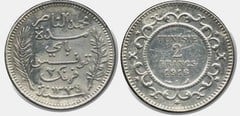
Tunisia | 5 centimes
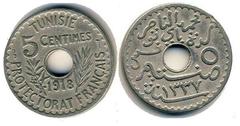
Tunisia | 10 centimes
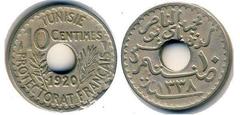
Tunisia | 25 centimes
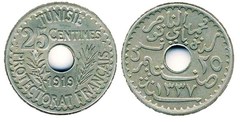
Tunisia | 50 centimes
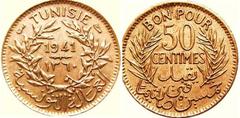
Tunisia | 1 franc
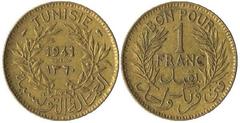
Tunisia | 2 francs
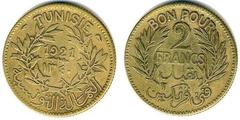
Tunisia | 10 centimes
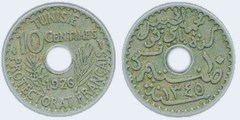
Tunisia | 100 francs
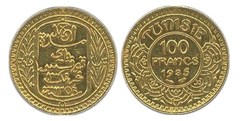
Tunisia | 5 centimes
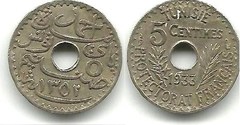
Tunisia | 10 centimes
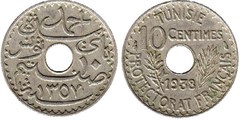
Tunisia | 25 centimes
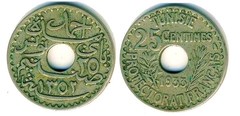
Tunisia | 5 francs
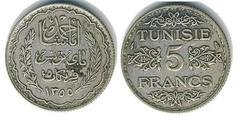
Tunisia | 10 francs
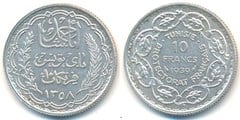
Tunisia | 10 centimes
The most valuable and popular coins
The most valuable French Protectorate (1881-1956) coins and sought after by collectors according to Foronum statistics are the following:

Historical information
The French Protectorate in Tunisia, established in 1881 and lasting until 1956, was a significant period in Tunisia's history that left a lasting imprint on various aspects of society, including its monetary system. During these 75 years, Tunisia underwent major changes in its economy and coinage, reflecting the French influence in the country.
Monetary system during the Protectorate
Under the French Protectorate, Tunisia adopted a monetary system based on the franc. The main monetary unit was the Tunisian franc, which was pegged to the French franc. Coins minted during this period featured a fascinating mix of Tunisian and French elements, symbolizing the duality of the government. The most common denominations included pieces of 1, 2, 5, 5, 10 and 20 francs, in addition to fractional coins. These coins usually bore inscriptions in Arabic and French, and frequently featured Tunisian national symbols such as the crescent moon and the star, along with decorative elements reflecting French artistic influence.
Evolution and characteristics of the coins
Throughout the Protectorate, Tunisian coins underwent several transformations in design and composition. In the early decades, it was common to see silver and bronze coins, but over time, due to economic fluctuations and changes in metal prices, cheaper alloys were introduced. One notable feature was the depiction of the Bey of Tunis on some coins, thus maintaining an element of Tunisian sovereignty, albeit under French supervision. During World War II, metal shortages led to emergency coinage, using alternative materials. Towards the end of the Protectorate, coins began to reflect the growing Tunisian nationalist movement, paving the way for the transition to independence in 1956, when Tunisia would establish its own sovereign monetary system.