1st Republic (1902-1962) Coin List
Cuba | 1 centavo
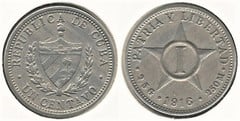
Cuba | 1 centavo
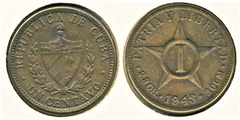
Cuba | 1 centavo
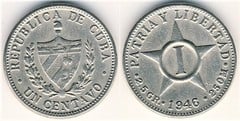
Cuba | 2 centavos (KM# A10)
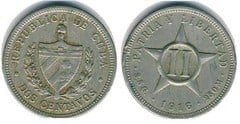
Cuba | 5 centavos
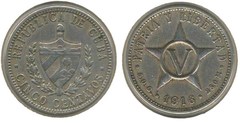
Cuba | 5 centavos
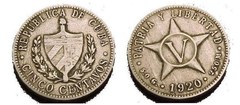
Cuba | 5 centavos
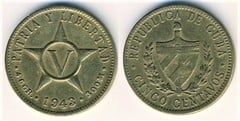
Cuba | 5 centavos
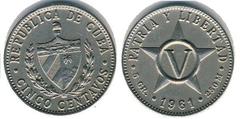
Cuba | 10 centavos (KM# A12)
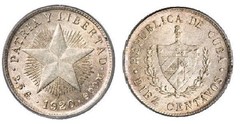
Cuba | 20 centavos
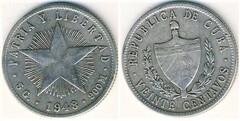
Cuba | 20 centavos
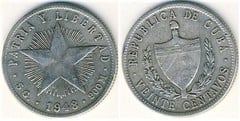
Cuba | 40 centavos
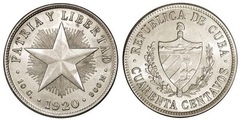
Cuba | 40 centavos
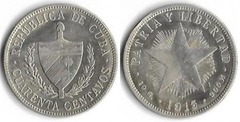
Cuba | 40 centavos
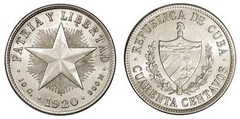
Cuba | 1 peso
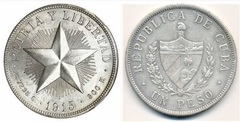
Cuba | 1 peso
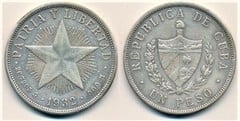
Cuba | 1 peso
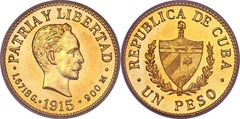
Cuba | 2 pesos
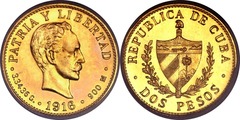
Cuba | 4 pesos
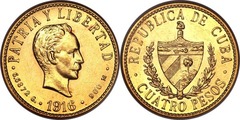
Cuba | 5 pesos
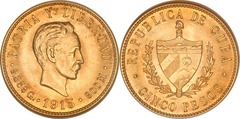
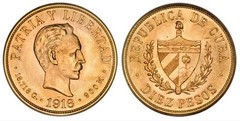
Cuba | 10 pesos
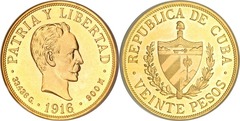
Cuba | 20 pesos
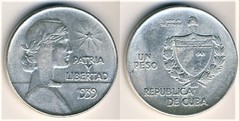
Cuba | 1 peso
Cuba | 10 centavos (50th Anniversary of the Republic)
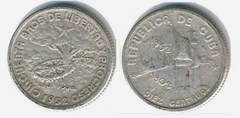
Cuba | 20 centavos (50th Anniversary of the Republic)
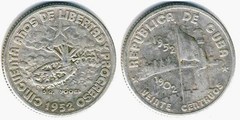
The most valuable and popular coins
The most valuable 1st Republic (1902-1962) coins and sought after by collectors according to Foronum statistics are the following:

Historical information
The First Republic of Cuba, which lasted from 1902 to 1962, was a crucial period in the island's monetary history. During these six decades, Cuba underwent important political and economic changes that were reflected in its monetary system and in the currencies that circulated in the country.
The birth of the Cuban currency
With Cuba's independence in 1902, the government of the new republic faced the challenge of establishing its own monetary system. Initially, the Spanish peso and the U.S. dollar continued to be used, but steps were soon taken to create a national currency. In 1914, the first series of Cuban coins was issued, which included denominations of 1, 2, 5, 10, 20 and 40 centavos, as well as silver pesos. These coins featured the national coat of arms on the obverse and the face value on the reverse, symbolizing Cuba's sovereignty and national identity.
Evolution and monetary changes
Throughout the First Republic, the Cuban monetary system underwent several modifications. In 1915, the Cuban convertible peso was introduced, which maintained a fixed parity with the U.S. dollar. This measure sought to stabilize the economy and facilitate international trade. During the 1930s, in response to the Great Depression, commemorative silver coins were issued to stimulate the economy. These pieces, such as the 1934 silver peso with the effigy of José Martí, became coveted collector's items. In the 1950s, new denominations and designs were introduced, including nickels and quarters, reflecting the country's modernization. The end of this monetary era came with the Cuban Revolution, which in 1961 brought about a monetary reform, marking the beginning of a new chapter in Cuba's numismatic history.