Old Kroon (1928-1940) Coin List
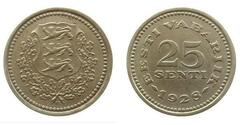
Estonia | 25 senti
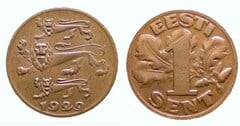
Estonia | 1 sent
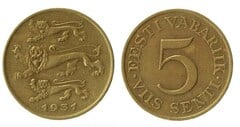
Estonia | 5 senti
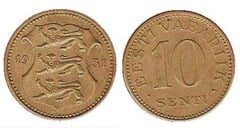
Estonia | 10 senti
Estonia | 2 krooni (Tercentenary of the University of Tartu)
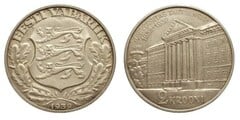
Estonia | 1 kroon (Tallinn Music Festival)
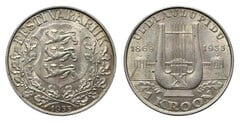
Estonia | 2 senti
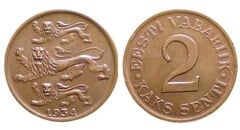
Estonia | 1 kroon
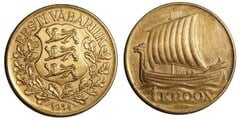
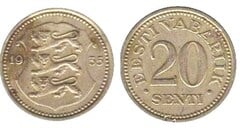
Estonia | 20 senti
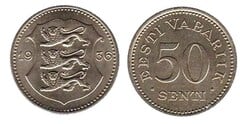
Estonia | 50 senti
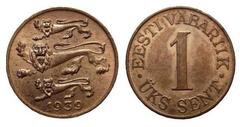
Estonia | 1 sent
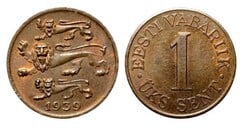
Estonia | 1 sent
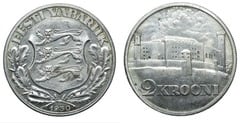
Estonia | 2 krooni (Tallinn Castle)
The most valuable and popular coins
The most valuable Old Kroon (1928-1940) coins and sought after by collectors according to Foronum statistics are the following:

Historical information
The Old Kroon was the official currency of Estonia from 1928 to 1940, a crucial period in the country's economic history. This currency played a key role in the consolidation of Estonian independence and in the development of its national economy after the First World War.
Introduction and characteristics of the Old Kroon
The Old Kroon was introduced on January 1, 1928, replacing the Estonian mark at a rate of 100 marks to 1 kroon. The monetary system was based on the gold standard, with 1 kroon equivalent to 0.4032 grams of fine gold. Old Kroon coins were minted in denominations of 1 sent, 2 senti, 5 senti, 10 senti, 25 senti, 1 kroon, 2 krooni and 5 krooni. These pieces featured emblematic designs reflecting Estonian national identity, including the Estonian coat of arms, floral motifs and important historical figures.
Economic Impact and End of the Old Kroon
During its circulation, the Old Kroon contributed significantly to Estonia's economic stability, facilitating international trade and attracting foreign investment. The currency maintained its relatively stable value until 1940, when Estonia was annexed by the Soviet Union. This event marked the end of the Old Kroon, which was replaced by the Soviet ruble. The last Old Kroon coins were minted in 1939, subsequently becoming highly prized collector's items by numismatists around the world due to their short period of circulation and their historical significance in Estonia's independence.