Drachma Coin List
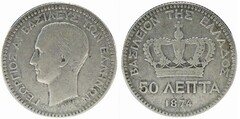
Greece | 50 lepta
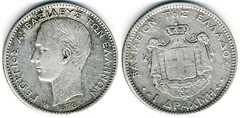
Greece | 1 drachma
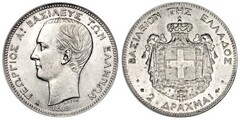
Greece | 2 drachmai
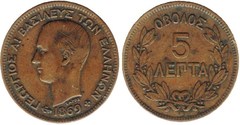
Greece | 5 lepta
Greece | 10 lepta
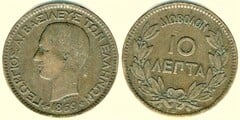
Greece | 5 drachmai
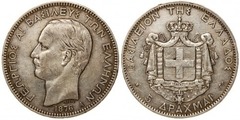
Greece | 5 lepta
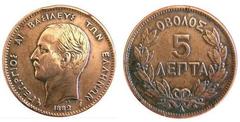
Greece | 10 lepta
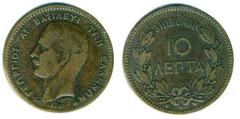
Greece | 20 lepta
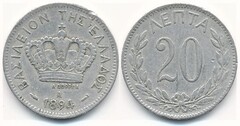
Greece | 5 lepta
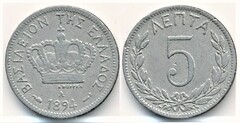
Greece | 10 lepta
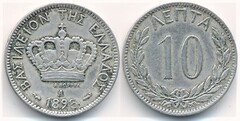
Greece | 1 drachma
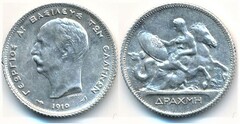
Greece | 5 lepta
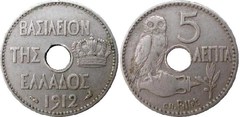
Greece | 10 lepta
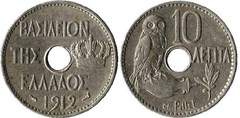
Greece | 20 lepta
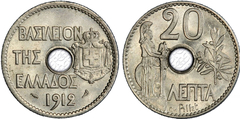
Greece | 10 lepta
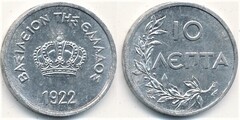
Greece | 10 lepta
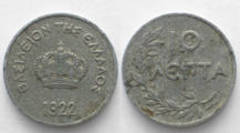
Greece | 20 lepta
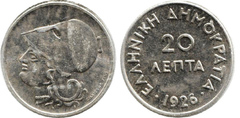
Greece | 50 lepta

Greece | 1 drachma

Greece | 2 drachmai
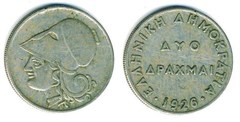
Greece | 5 drachmai
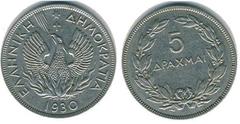
Greece | 5 drachmai
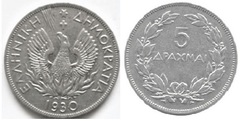
Greece | 10 drachmai
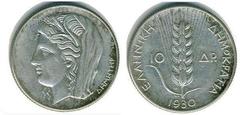
Greece | 20 drachmai
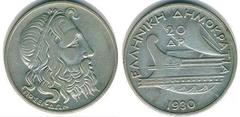
The most valuable and popular coins
The most valuable Drachma coins and sought after by collectors according to Foronum statistics are the following:

Historical information
The monetary history of Greece spans over 2500 years, from the introduction of the drachma in ancient Greece to the adoption of the euro in 2002. The drachma was one of the most influential currencies of antiquity, laying the foundation for many later monetary systems in Europe and beyond.
The drachma in Ancient Greece
The drachma was introduced in Greece around the 7th century BC and quickly became the standard currency of the Greek city-states. Each polis minted its own coins, often with unique designs that reflected its identity and culture. For example, Athenian coins featured the goddess Athena and her sacred owl, while those of Corinth depicted the mythical Pegasus. The Greek monetary system was based on the silver standard, with denominations including the obol, drachma and tetradrachm. The influence of the drachma spread beyond Greece, being adopted by the Hellenistic kingdoms and serving as an inspiration for Roman coins.
From the modern drachma to the euro
Following Greece's independence from the Ottoman Empire in 1821, the drachma was reintroduced as the national currency in 1832. Throughout the 19th and 20th centuries, the drachma underwent numerous fluctuations and currency reforms, reflecting the country's turbulent economic and political history. During this period, Greece saw the introduction of banknotes and the minting of commemorative coins celebrating historical events and important figures. On January 1, 2002, Greece officially adopted the euro, ending more than 2,600 years of drachma history. The transition to the euro marked a new chapter in Greece's monetary history, integrating the country more deeply into the European and global economy.