Monetary Reform (1952-1966) Coin List
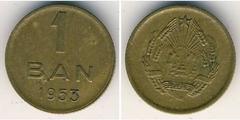
Romania | 1 ban
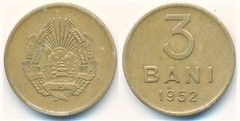
Romania | 3 bani
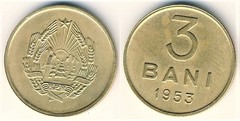
Romania | 3 bani
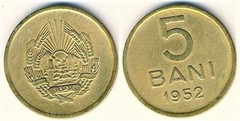
Romania | 5 bani
Romania | 5 bani
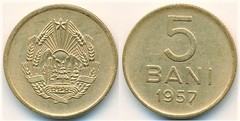
Romania | 10 bani
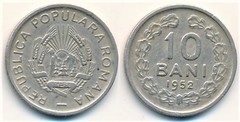
Romania | 10 bani
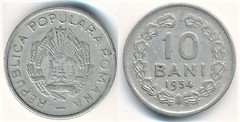
Romania | 10 bani
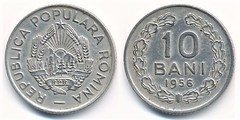
Romania | 25 bani
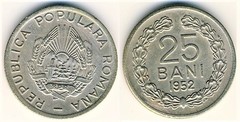
Romania | 25 bani
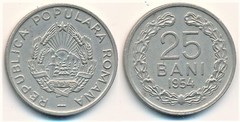
Romania | 25 bani
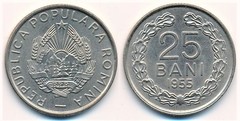
Romania | 50 bani
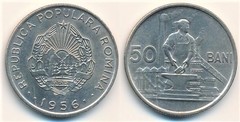
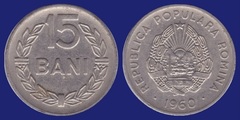
Romania | 15 bani
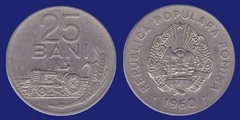
Romania | 25 bani
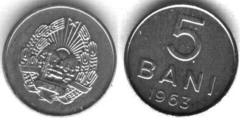
Romania | 5 bani
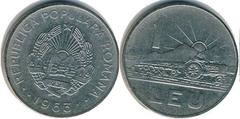
Romania | 1 leu
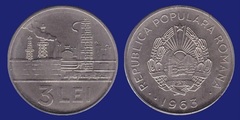
Romania | 3 lei
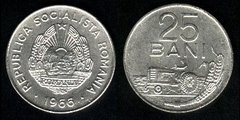
Romania | 25 bani
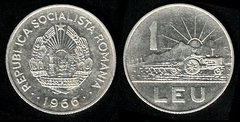
Romania | 1 leu
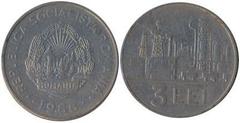
Romania | 3 lei
The most valuable and popular coins
The most valuable Monetary Reform (1952-1966) coins and sought after by collectors according to Foronum statistics are the following:

Historical information
The Monetary Reform in Romania between 1952 and 1966 was a period of significant changes in the country's monetary system. This era was marked by the transition from the old leu to the new leu, as well as the introduction of new coins and banknotes that reflected the political and economic changes in the country under the communist regime.
The 1952 Reform
In 1952, Romania implemented a radical currency reform that established a new currency: the leu of the People's Republic of Romania. This reform involved a massive devaluation of the previous currency, with an exchange rate of 20 old lei to 1 new leu. New coins of 1, 3 and 5 bani, as well as 10, 25 and 50 bani were introduced, all minted in aluminum. These coins featured communist symbols such as the five-pointed star and the coat of arms of the People's Republic of Romania. The 1952 reform also saw the issuance of banknotes in denominations of 1, 3, 5, 10, 10, 25 and 100 lei, which featured images of workers, peasants and industrial symbols, reflecting the socialist ideology of the regime.
Changes and Evolution until 1966
Between 1952 and 1966, the Romanian monetary system underwent several adjustments. In 1960, new coins of 15 and 25 bani in a nickel-brass alloy were introduced, which coexisted with the previous issues. A significant change occurred in 1963, when silver commemorative coins of 1 and 3 lei were issued, the first of this type since the 1952 reform. These commemorative coins celebrated the centenary of the University of Bucharest. In 1966, another major monetary reform was carried out, which included the introduction of 5, 15 and 25 bani coins in nickel-plated steel, as well as new 1 and 3 lei coins in nickel. This reform also saw the issuance of new banknotes with updated designs, marking the beginning of a new era in Romanian numismatics under the leadership of Nicolae Ceaușescu.