Dollar (1991-2006) Coin List
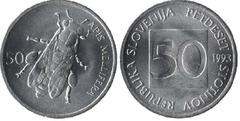
Slovenia | 50 stotinov
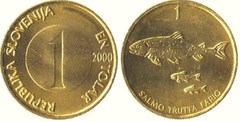
Slovenia | 1 tolar
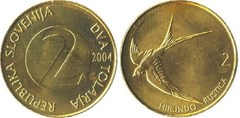
Slovenia | 2 tolarjev
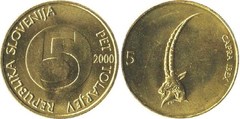
Slovenia | 5 tolarjev
Slovenia | 10 stotinov
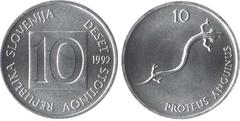
Slovenia | 20 stotinov
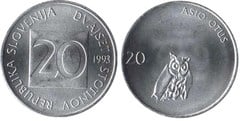
Slovenia | 5 tolarjev (400th anniversary of the Battle of Sisak)
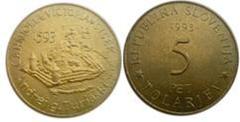
Slovenia | 5 tolarjev (300th anniversary of the Academia Operosorum Labacensium)
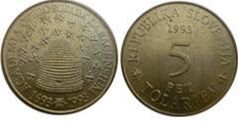
Slovenia | 5 tolarjev (50th anniversary of the Slovenian Monetary Institute)
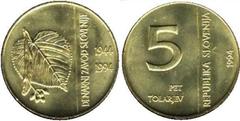
Slovenia | 5 tolarjev (1000 years since the death of Bishop Abraham)
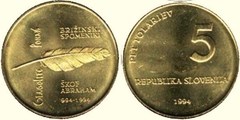
Slovenia | 5 tolarjev (FAO 50th anniversary)
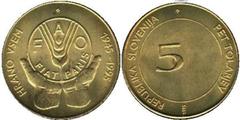
Slovenia | 5 tolarjev (50th anniversary of the victory over nazism and fascism)
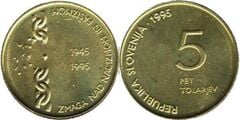
Slovenia | 5 tolarjev (100th Anniversary of the Aljaž Tower Uprising)
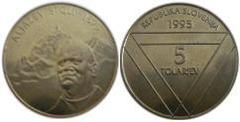
Slovenia | 5 tolarjev (150 years of the first railroad in Slovenia)
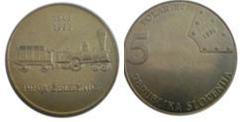
Slovenia | 5 tolarjev (5th anniversary of Slovenia's independence)
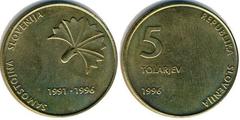
Slovenia | 5 tolarjev (Centenary of the Olympic Games)
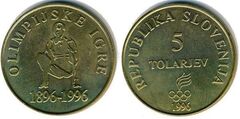
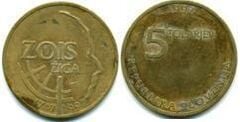
Slovenia | 5 tolarjev (250th anniversary of the birth of Žiga Zois)
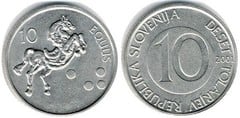
Slovenia | 10 tolarjev
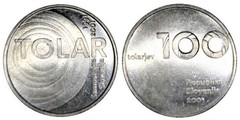
Slovenia | 100 tolarjev (10 Years of Independence-National Coin)
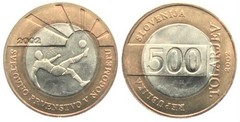
Slovenia | 500 tolarjev (FIFA World Cup-2002)
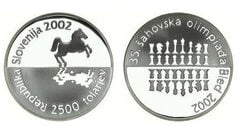
Slovenia | 2500 tolarjev (35th Bled Chess Olympiad)
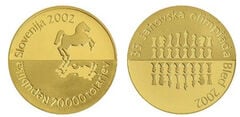
Slovenia | 20000 tolarjev (35th Bled Chess Olympiad)
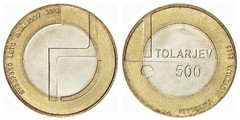
Slovenia | 500 tolarjev (Year of People with Disabilities)
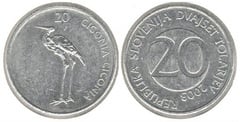
Slovenia | 20 tolarjev
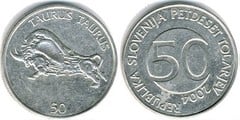
Slovenia | 50 tolarjev
The most valuable and popular coins
The most valuable Dollar (1991-2006) coins and sought after by collectors according to Foronum statistics are the following:

Historical information
The Slovenian tolar was the official currency of Slovenia from its independence in 1991 until the adoption of the euro in 2007. During this 15-year period, the tolar played a crucial role in the country's economic and political transition, reflecting its history and culture through its designs and denominations.
Introduction and first issues
After declaring its independence from Yugoslavia in 1991, Slovenia needed to establish its own currency as a symbol of sovereignty. The tolar was officially introduced on October 8, 1991, replacing the Yugoslav dinar. The first coins issued were of 1, 2, 5 and 10 tolarov, minted in aluminum to reduce costs due to the country's economic situation. These coins featured simple designs with motifs of Slovenian fauna, such as the alpine marmot on the 1 tolar coin and the Lira rooster on the 2 tolar coin. In 1992, higher denomination coins were introduced, including the 20 and 50 tolarov coins, which incorporated historical and cultural elements such as the Prince's Stone, an ancient symbol of Slovenian sovereignty.
Evolution and commemorative series
Throughout its existence, the tolar underwent several modifications and special issues. In 1993, the 3 tolarov coin was introduced, an unusual denomination commemorating the anniversary of independence. Regular circulation coins were updated in 2000 with new designs reflecting the country's modernization. In addition, Slovenia issued numerous commemorative silver and gold coins, celebrating historical events, cultural figures and national achievements. One particularly notable series was dedicated to Slovenia's accession to the European Union in 2004, which included a bimetallic 500 tolarov coin. In its later years, the tolar remained a symbol of Slovenian national identity, until its replacement by the euro on January 1, 2007, marking the end of an era in the country's monetary history.