The most valuable 2 € coins: updated list with photos, mintages and value

The most valuable 2 euro coins tend to be low mintage commemorative issues, especially from Monaco, Vatican and San Marino. Among the most sought after are the Grace Kelly coin from Monaco 2007, the Vatican World Youth Day 2005 coin, San Marino 2004 dedicated to Bartolomeo Borghesi and several recent issues from Monaco with very low mintages.
The real value depends on the state of conservation, demand, mintage, authenticity, if the original case is preserved and recent market prices. A circulated coin can be worth much less than an uncirculated or uncirculated Flor de Cuño quality coin.
Discover in this article which are the most valuable 2 euro coins and how to identify them.
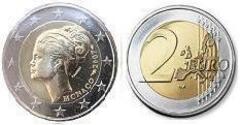
2€ Grace Kelly - Monaco, 2007 (print run 20.001)
The 2 euro coin dedicated to Grace Kelly, issued in 2007 by Monaco, is a real gem for collectors. With an exceptionally low mintage of only 20,001, it has become the most sought-after and valuable 2-euro coin to date. Its design features the elegant profile of Princess Grace Kelly, a symbol of glamour and elegance. Its scarcity and high demand have boosted its price, reaching over $2,500 in perfect condition.
Monaco | 2 euro (Grace Kelly)
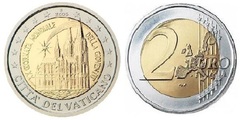
2 euros Vatican - XX World Youth Day, 2005 (print run 100,000)
The Vatican City issued this commemorative coin in 2005 on the occasion of the XX World Youth Day (WYD), held in Cologne (Germany) in August of that year, already under the pontificate of Benedict XVI. The minting was carried out by the Istituto Poligrafico e Zecca dello Stato italiano, traditionally in charge of Vatican issues.
Vatican issues are always in high demand due to their limited mintage and their distribution mostly in official boxes. The price on the secondary market can vary significantly depending on the state of conservation; for a reliable valuation, it is advisable to consult updated numismatic catalogs such as Foronum.
Vatican | 2 euro (XX World Youth Day)
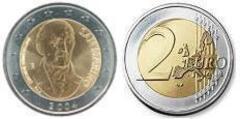
2€ San Marino - Bartolomeo Borghesi, 2004 (print run 110.000)
First commemorative coin of 2 € issued by the Republic of San Marino, dedicated to Count Bartolomeo Borghesi (1781-1860), Italian historian, epigrapher and numismatist who spent the last part of his life in San Marino and had a notable influence on the classical epigraphy of the 19th century.
Because it is one of the early commemoratives of the microstates and because of its relatively low mintage, it is a very sought after piece to complete series. Its value depends on the state of preservation and if the case and official certificate are preserved; it is advisable to check with specialized catalogs before any transaction. Due to its low mintage and the uniqueness of its subject, this coin can reach values close to 200 euros in impeccable condition.
San Marino | 2 euro (Bartolomeo Borghesi)
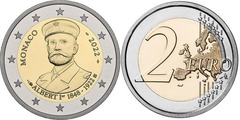
2 euro coin of Monaco - 100th Anniversary of the death of Prince Albert I (2022)
The 2 euro coin issued in 2022 by the Principality of Monaco commemorates the centenary of the death of Prince Albert I, known as the "Prince Navigator". This piece stands out for its careful design showing the prince's portrait next to a marine representation, honoring his passion for oceanography. With an exceptionally low mintage of only 15,000, it has quickly become a highly valued coin on the numismatic market, fetching prices in excess of $600 in mint condition.
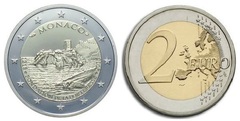
2 euro coin of Monaco - 800th Anniversary of the First Castle on the Rock (2015)
The €2 coin issued by Monaco in 2015 celebrates the 800th anniversary of the beginning of the construction of the first castle on the iconic Rock of Monaco. Its exclusive design features a detailed depiction of the original fortress, a symbol of Monegasque power and history. With an extremely limited issue of only 10,000 pieces, this coin is among the rarest and most valuable in the euro zone, routinely trading at over $1000 in uncirculated quality.
Monaco | 2 euro (100th Anniversary of the Death of Albert I)
Monaco | 2 euro (800th Anniversary of the Construction of the First Castle on the Rock)
Other 2 € coins to watch: we show you the photos of the most valuable ones
There are many 2 euro coins that, without being as well known as the most famous issues of Monaco, Vatican or San Marino, also reach interesting prices in the numismatic market. They are generally pieces with reduced mintages, minting errors or particularities in their designs that attract the attention of collectors. Some may come from countries such as Finland, Malta, Belgium or Germany, which have launched limited commemorative editions that have gradually increased in value. Check your collection carefully: you may have a numismatic surprise on your hands.

How we estimate the value of these coins on Foronum
The values shown in Foronum are approximate and may vary depending on the state of conservation, recent sales, collector demand, known mintage, issuing country, presence of errors and authenticity of the piece. They should not be interpreted as a closed appraisal. For high value coins we recommend checking with a numismatic store, an auction house or an expert.
Foronum incorporates a database of collections valued by professional and amateur collectors, which provides a reliable and global view of the market price of coins.
How to identify if your €2 coin is valuable
There are several factors that directly influence the value of a €2 coin. From its rarity to its state of preservation, every detail counts when determining whether a piece can be considered valuable to collectors.
- Rarity of the coin: The fewer units have been minted, the more difficult it will be to find and, therefore, the higher its value in the numismatic market.
- Year of issue and mintage: Some two-euro coins have a high value because they belong to years with very limited mintages or minting errors.
- Country of origin: Small countries such as Monaco, San Marino, Vatican or Andorra usually issue coins in smaller quantities, which increases their value.
- State of preservation: Coins in "uncirculated" or "Flor de Cuño (FDC)" condition fetch much higher prices than those with obvious signs of wear.
- Commemorative designs: Some special commemorative 2 euro issues are highly sought after by collectors, especially if they commemorate historical events or important figures.
- Minting errors: Coins with errors, such as misaligned inscriptions, double minting or edge flaws, can fetch very high prices.
- Market demand: Even if a coin is rare, its ultimate value will also depend on the interest it arouses among collectors at a given time.
- Authenticity: Verifying that it is not a counterfeit is essential. Copies or replicas have no collectible value and can be misleading.
Where to sell or appraise a valuable 2 Euro coin safely
If you think you have a valuable €2 coin, don't spend it on just any purchase: you could be handing over a piece worth tens or even hundreds of euros. There are several reliable and safe options for selling, appraising or validating these types of coins, both in person and online.
- Numismatic stores: Going to a specialized numismatic store is one of the safest ways to get a professional appraisal. There they can verify the authenticity of the coin, its state of preservation and its possible value in the current market. In addition, many stores will buy directly or help you find a buyer.
- Numismatic fairs and conventions: In these events you can find collectors, experts and sellers willing to exchange or buy coins. They are ideal places to get expert opinions, compare prices and learn more about the 2 euro coin market.
- Specialized online platforms: Sites such as eBay, TodoColección, Foronum or collecting groups on social networks allow you to sell valuable coins to a wide audience. Be sure to include quality photos, a good description and verify the exact condition of the coin (uncirculated, with errors, etc.).
- Numismatic auction houses: If you have a very rare or valuable coin, you can consider presenting it at a specialized auction. Some numismatic houses accept pieces for public or online auction, where they can fetch higher prices among serious collectors.
Before taking it anywhere, be sure to correctly identify the coin, check if it is a limited edition, commemorative or if it has any minting errors, as these factors directly influence its value.
Frequently asked questions about valuable 2 € coins
How do I know if my 2 Euro coin is worth money?
Check the country, the year, the design, the mintage, the edge, the state of conservation and if it appears in catalogs or recent sales. If you suspect that it is a rare or flawed coin, avoid cleaning it and consult a specialist.
Should I clean a valuable 2 Euro coin?
No. Cleaning a coin can reduce its value for collectors, especially if it is an uncirculated piece, with original patina or with a possible minting error.
Can normal 2 euro coins also be worth more?
Yes, in two cases: when they belong to a year with a very low mintage in their country (for example, certain years of Finland or Luxembourg) or when they have a verifiable minting error. For the rest, their value coincides with their face value.
What is the weight, diameter and composition of a €2 coin?
The official specifications of the European Central Bank are: weight 8.5 g, diameter 25.75 mm, thickness 2.20 mm, bimetallic composition (cupro-nickel center, nickel-brass ring) and fluted edge with an inscription that varies according to the issuing country.
Can I sell a 2 € coin on Foronum?
Yes, on Foronum you can catalog your collection, consult reference prices provided by the community and exchange or sell with other collectors. For high value pieces, we recommend accompanying the offer with detailed photos and, if available, a certificate of authenticity.
In short: learn how to identify them
The most valuable 2 € coins combine three traits: low mintage, small issuing country (mostly microstates) and good state of preservation. Issues from Monaco, Vatican and San Marino concentrate the highest figures in the secondary market, but there are also opportunities in specific years from large countries and, above all, in pieces with minting errors. Before buying, selling or appraising a piece, check the data with specialized catalogs and always verify the authenticity.