Vietnam-Empire Coin List
Vietnam-Empire | 1 Dong
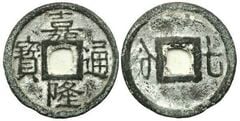
Vietnam-Empire | 1 cash (Gia Long Thông Bảo)

Vietnam-Empire | 1 cash (Gia Long Thông Bảo)

Vietnam-Empire | 1 phan (Minh Mạng Thông Bảo)
Vietnam-Empire | 1 cash (Thiệu Trị Thông Bảo)

Vietnam-Empire | 1 cash (Tự Đức Thông Bảo)

Vietnam-Empire | 1 cash (Tự Đức Thông Bảo)

Vietnam-Empire | 6 văn (Tự Đức Thông Bảo).
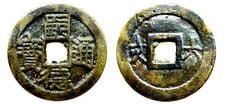
Vietnam-Empire | 10 văn (Tự Đức Bảo Sao).
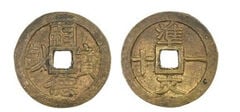
Vietnam-Empire | 20 văn (Tự Đức Bảo Sao).
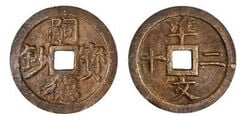
Vietnam-Empire | 30 văn (Tự Đức Bảo Sao).
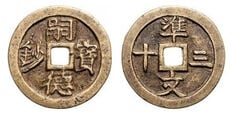
Vietnam-Empire | 40 văn (Tự Đức Bảo Sao).
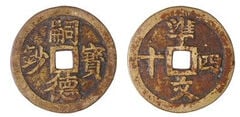
Vietnam-Empire | 50 văn (Tự Đức Bảo Sao).
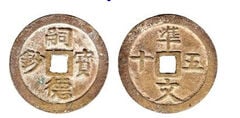
Vietnam-Empire | 60 văn (Tự Đức Bảo Sao).
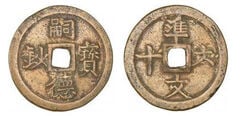
Vietnam-Empire | 6 văn (Hàm Nghi Thông Bảo)
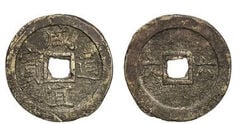
Vietnam-Empire | 1 cash (Thành Thái Thông Bảo)
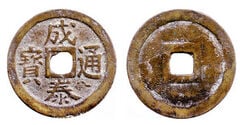
Vietnam-Empire | 10 cash (Thành Thái Thông Bảo)

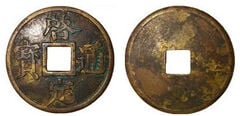
Vietnam-Empire | 1 cash (Khải Định Thông Bảo)
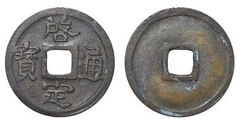
Vietnam-Empire | 1 cash (Khải Định Thông Bảo)
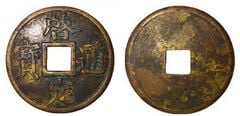
Vietnam-Empire | 1 cash (Khải Định Thông Bảo)
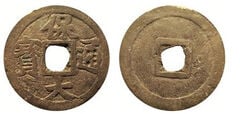
Vietnam-Empire | 1 cash (Bảo Đại Thông Bảo)
The most valuable and popular coins
The most valuable Vietnam-Empire coins and sought after by collectors according to Foronum statistics are the following:

Vietnam' s monetary history during the imperial period is fascinating and complex. Over the centuries, the country has undergone various changes in its monetary system, reflecting the political and economic transformations of the region.
Coins used in Imperial Vietnam
For much of its imperial history, Vietnam used the system of sapèques, round bronze or copper coins with a square hole in the center. These coins, known as "đồng" in Vietnamese, were widely used until the early 20th century. In addition, silver and gold ingots also circulated as high-value forms of money, especially in important transactions and international trade.
Significant milestones in Vietnamese numismatics
A significant milestone in Vietnamese numismatics was the introduction of the Indochina piastra in 1885 during the French colonial period. This currency gradually replaced the traditional sapèques system. Another important event was the issuance of banknotes by the Bank of Indochina from 1875, marking the transition to a more modern monetary system. After independence, South Vietnam introduced the đồng in 1953, while North Vietnam adopted its own version in 1946, finally unifying after the country's reunification in 1975.
Vietnam-Empire is a country that does not exist today. It is now part of the Vietnam old coins.