Buenos Aires Coin List
Argentina-Provinces | 1 décimo de real
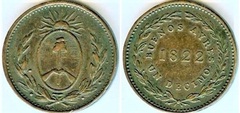
Argentina-Provinces | 5/10 real
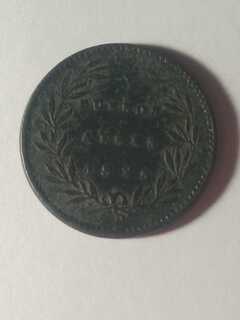
Argentina-Provinces | 1 real
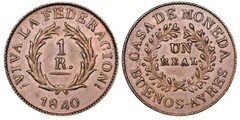
Argentina-Provinces | 2 reales
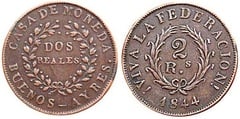
Argentina-Provinces | 2 reales
Argentina-Provinces | 2 reales
The most valuable and popular coins
The most valuable Buenos Aires coins and sought after by collectors according to Foronum statistics are the following:

Historical information
The monetary history of Buenos Aires during the time of the United Provinces of the Río de la Plata is a fascinating reflection of the political and economic changes that the region experienced. From independence to the consolidation of the Argentine nation, the coins minted in Buenos Aires were silent witnesses to an era of transformation.
The era of independence and the first mints
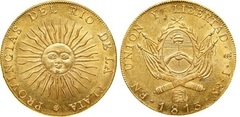
After the May Revolution of 1810, Buenos Aires became the political and economic center of the United Provinces of the Río de la Plata. In 1813, the first national coins, known as "Soles de la Patria", were minted at the Potosí Mint. These pieces, which bore the emblem of the Sun of May, symbolized the break with the colonial past and the affirmation of the new national identity. However, the political instability and civil wars that followed independence made it difficult to consolidate a uniform monetary system, which led to the circulation of various foreign coins and the issuance of provincial coins.
The Rosas era and monetary consolidation
During the government of Juan Manuel de Rosas (1829-1852), Buenos Aires experienced a period of centralization of power that was also reflected in its monetary policy. In 1836, the peso fuerte was established as the monetary unit, and silver and copper coins were minted at the Buenos Aires Mint. These pieces, known as "Rosas pesos", bore the effigy of the governor and became a symbol of his regime. The relative stability of this period allowed for greater uniformity in monetary circulation, although tensions between Buenos Aires and the other provinces persisted. After the fall of Rosas in 1852, the monetary system continued to evolve, laying the foundations for Argentina's future national currency.