Old Kuna (1941-1945) Coin List
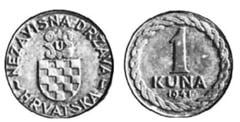
Croatia | 1 kuna
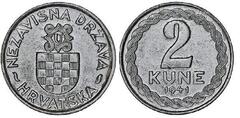
Croatia | 2 kuna
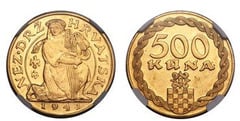
Croatia | 500 kuna (Reaper Woman)
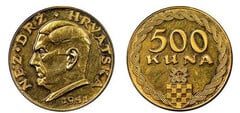
Croatia | 500 kuna (Ante Pavelić)
The most valuable and popular coins
The most valuable Old Kuna (1941-1945) coins and sought after by collectors according to Foronum statistics are the following:

Historical information
The Old Kuna was the official currency of the Independent State of Croatia during World War II, from 1941 to 1945. This turbulent period in Croatian history saw the introduction of a new monetary unit that reflected the complex political and economic circumstances of the time.
Introduction and characteristics of the Old Kuna
The Old Kuna was introduced on July 26, 1941, replacing the Yugoslav dinar at a rate of 1 kuna to 20 dinars. The name "kuna" is derived from the sable, an animal whose skins were historically used as a medium of exchange in the region. The monetary system was divided into 100 banicas per kuna. Coins were minted in denominations of 1, 2, 5 and 10 banicas, as well as 1, 2 and 5 kunas. These pieces were produced mainly in zinc, with some issues in bronze and aluminum. The coins featured Croatian national motifs, including the coat of arms of the Independent State of Croatia and historical figures such as King Zvonimir.
Historical context and legacy
The Old Kuna was a wartime coin, subject to significant inflation due to the economic policies of the Ustaša regime and the pressures of occupation. As the war progressed, the value of the kuna deteriorated rapidly, leading to the issuance of high denomination banknotes. After the defeat of the Independent State of Croatia in 1945, the Old Kuna was replaced by the Yugoslav dinar of the new communist government. Despite its short existence, the Old Kuna represents a fascinating chapter in Croatia's numismatic history, serving as a tangible testimony to a tumultuous period. Coins from this era are now objects of interest to collectors and historians, offering a unique window into Croatia's complex history during World War II.