
Nassau Coin List
Germany-States | 1/4 kreuzer (Guillermo)
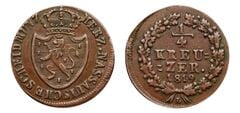
Germany-States | 1/4 kreuzer
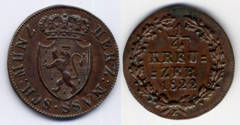
Germany-States | 3 kreuzer
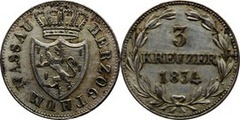
Germany-States | 1 pfening
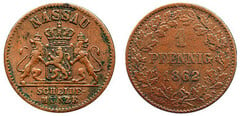
Germany-States | 1 kreuzer
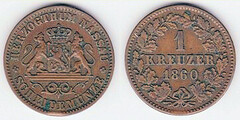
The most valuable and popular coins
The most valuable Nassau coins and sought after by collectors according to Foronum statistics are the following:

Historical information
The House of Nassau played a crucial role in the history of Germany and the German states for several centuries. Its influence extended from the Holy Roman Empire to the Netherlands, leaving an indelible mark on European politics and culture. The coins minted by the House of Nassau are tangible testimonies of its power and prestige.
Origins and Expansion of the House of Nassau
The House of Nassau traces its roots back to the 11th century, when Count Dudo-Enrique of Laurenburg built the castle of Nassau. Over the centuries, the family expanded its influence through marriage alliances and territorial acquisitions. In the 13th century, the House of Nassau split into two main branches: the Walram line and the Otto line. This division had a significant impact on the subsequent history of the family and on the numismatics of the region. Coins minted by both branches reflect the complexity of the political and economic relationships of the time, with designs incorporating distinctive heraldic symbols of each line.
Nassau Coins and their Numismatic Legacy
Nassau coins are highly valued by collectors because of their rich history and diversity. From silver thalers to copper kreuzer, these pieces offer a unique window into the economy and politics of the German states. One of the most notable issues was the "Nassauer Goldgulden," a gold coin minted in the 15th century that became a standard of trade in the region. During the Holy Roman Empire period, the counts and princes of Nassau exercised their minting rights, producing coins bearing their effigies and coats of arms. These coins served not only as a medium of exchange, but also as tools of political propaganda, asserting the legitimacy and power of the House of Nassau in an ever-changing political landscape.