
Austro-Hungarian Forint (1857-1892) Coin List
Hungary | 1 forint
Hungary | 1 forint
The most valuable and popular coins
The most valuable Austro-Hungarian Forint (1857-1892) coins and sought after by collectors according to Foronum statistics are the following:

Historical information
The Austro-Hungarian guilder, also known as forint, was the official currency of the Austro-Hungarian Empire from 1857 to 1892. This period marked an era of significant changes in the monetary history of the region, reflecting the political and economic transformations of the empire.
Origin and characteristics of the Austro-Hungarian Forint
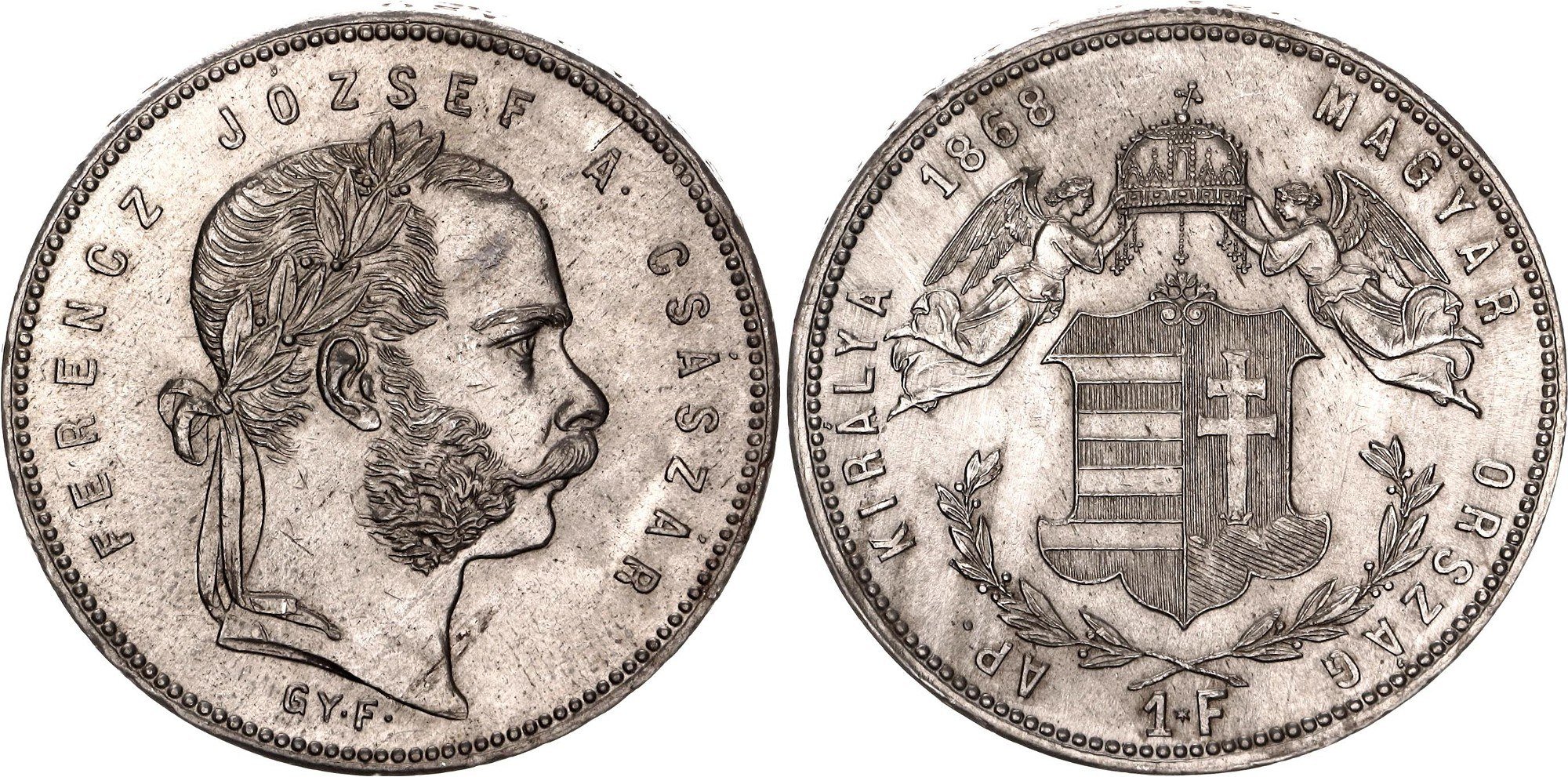
The Austro-Hungarian florin was introduced as part of the monetary reform of 1857, which sought to unify and modernize the empire's monetary system. This currency replaced the previous convention florin and was based on a silver standard. The guilder was divided into 100 kreuzer, and coins were minted in denominations ranging from 1 kreuzer to 4 guilders. The most common coins were the silver 1 guilder coins, which showed the portrait of Emperor Franz Joseph I on the obverse and the imperial coat of arms on the reverse. Gold coins were also issued, such as the 4 and 8 florin pieces, which were mainly used for international transactions and as a store of value.
Evolution and decline of the Austro-Hungarian florin
During its period of circulation, the Austro-Hungarian guilder experienced several changes and challenges. The Austro-Prussian War of 1866 and its economic consequences led to a temporary depreciation of the currency. However, the empire managed to stabilize its economy and the forint regained its value in the following years. In 1867, with the Austro-Hungarian Compromise, the dual monarchy was established, but the monetary system remained unified. As the 19th century progressed, the empire began to consider adopting the gold standard, following the international trend. This led to the currency reform of 1892, which introduced the Austro-Hungarian krona as the new currency, marking the end of the forint era. During this transition period, both currencies circulated simultaneously, with a fixed exchange rate of 2 kronor to 1 guilder, facilitating a gradual transition to the new monetary system.