Thurgau Coin List
Swiss cantons | 1/2 kreuzer
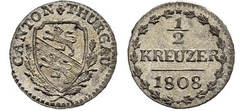
Swiss cantons | 1 kreuzer (Short oak branches)
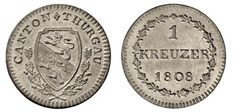
Swiss cantons | 1 kreuzer (Long oak branches)
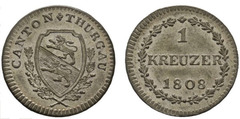
Swiss cantons | 1/2 batzen (⋆ Stars ⋆)
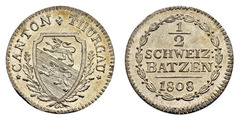
Swiss cantons | 1/2 batzen (⪪ Fleurons ⪫)
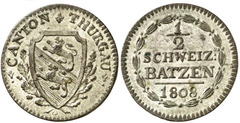
Swiss cantons | 5 batzen (With dot)
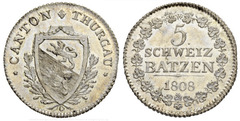
Swiss cantons | 5 batzen (No dot)
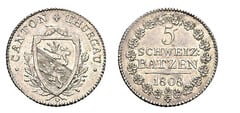
Swiss cantons | 1 batzen (Big flourish in the legend.)
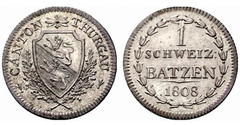
Swiss cantons | 1 batzen (Small fleuron in the legend.)
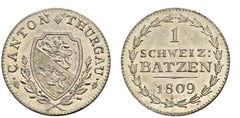
The most valuable and popular coins
The most valuable Thurgau coins and sought after by collectors according to Foronum statistics are the following:

Historical information
The canton of Thurgau, located in northeastern Switzerland, has a rich numismatic history dating back to the Middle Ages. Over the centuries, this region experienced political and economic changes that were reflected in its coinage, from local coins to confederate issues.
Medieval and Modern Thurgau Coins
In medieval times, Thurgau was under the control of various feudal and ecclesiastical lords, each with their own minting rights. The abbeys of St. Gallus and Reichenau were particularly influential in the region's monetary production. As Thurgau became integrated into the Swiss Confederation in the 15th century, its coins began to reflect this new political reality. The "batzen" and "kreuzer" became common denominations, often featuring heraldic symbols of the canton, such as the lion rampant. During the period of the Helvetic Republic (1798-1803), Thurgau, like other cantons, saw a brief interruption in its local coinage, replaced by a unified national coinage.
Transition to the Swiss federal currency
With the formation of the Swiss federal state in 1848, Thurgau, like other cantons, ceded its minting rights to the central government. This change marked the end of independent cantonal issues and the beginning of a unified monetary system for the whole of Switzerland. However, the numismatic legacy of Thurgau was kept alive in collections and museums. The canton's historical coins, from medieval denarii to 18th century thalers, became valuable testimonies to the economic and political evolution of the region. Today, these pieces are highly prized by collectors and scholars, offering a unique window into the history of Thurgau and its role in the formation of the Swiss Confederation.