Zaire Coin List
Zaire | 5 zaires (Hotel Intercontinental Kinshasa)
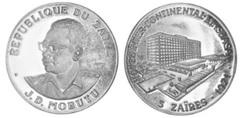
Zaire | 10 zaires (Hotel Intercontinental Kinshasa)
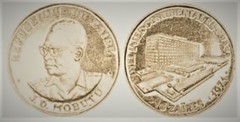
Zaire | 10 zaires (Hotel Intercontinental Kinshasa)
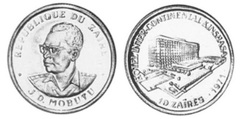
Zaire | 20 zaires (Hotel Intercontinental Kinshasa)
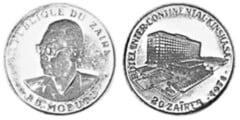
Zaire | 20 zaires (Hotel Intercontinental Kinshasa)
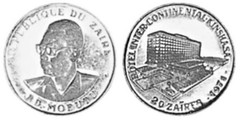
Zaire | 50 zaires (Hotel Intercontinental Kinshasa)
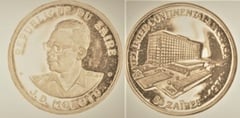
Zaire | 10 makuta
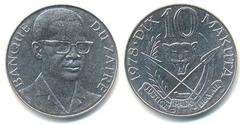
Zaire | 20 makuta
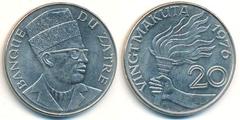
Zaire | 2 1/2 zaires (Conservation)
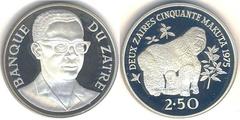
Zaire | 5 zaires (Conservation)
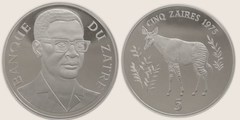
Zaire | 100 zaires (Conservation)
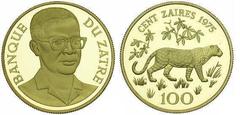
Zaire | 5 makuta
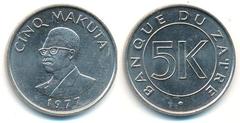
Zaire | 1 zaire
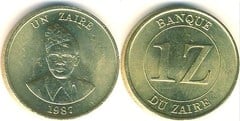
Zaire | 5 zaires
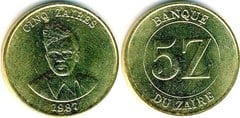
Zaire | 10 zaires
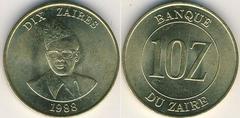
Zaire | 500 zaires (Leopard)
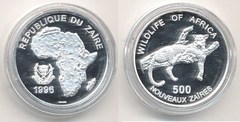
Zaire | 500 zaires (Gorilla)
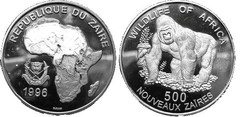
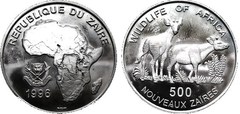
Zaire | 500 zaires (Okapi)
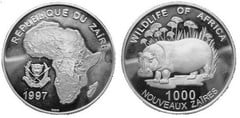
Zaire | 1.000 zaires (Hippo)
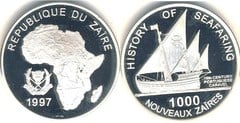
Zaire | 1.000 zaires (Portuguese Caravel)
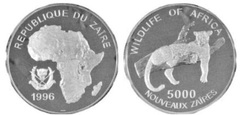
Zaire | 5.000 zaires (Leopard)
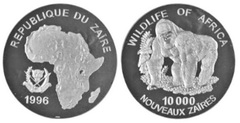
Zaire | 10.000 zaires (Gorilla)
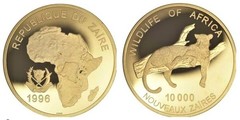
Zaire | 10.000 zaires (Leopard)
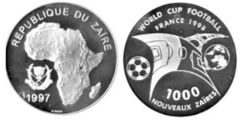
Zaire | 1,000 zaires (World Soccer Championship-France 1998)
The most valuable and popular coins
The most valuable Zaire coins and sought after by collectors according to Foronum statistics are the following:

The monetary history of Zaire is a fascinating reflection of the political and economic changes the country has undergone. From its independence in 1960 to the present day, Zaire, now known as the Democratic Republic of Congo, has seen several transformations in its monetary system, each marking a distinct stage in its national development.
The zaïre as the national currency
In 1967, Zaire adopted the zaïre as its official currency, replacing the Congolese franc. This new currency was introduced as part of President Mobutu Sese Seko's economic reforms. The zaïre was divided into 100 makuta and both coins and banknotes were issued. However, hyperinflation in the 1990s led to the issuance of increasingly higher denomination bills, with 5 million zaïre bills being printed in 1992.
Transition to the Congolese franc
After the fall of the Mobutu regime in 1997, the country reverted to the Congolese franc as its official currency. This change marked the end of the zaïre era and the beginning of a new era in the country's numismatics. New series of coins and banknotes were introduced, reflecting the new national identity. An important milestone in Congolese numismatics was the issuance in 2002 of a commemorative series of silver coins to celebrate the 40th anniversary of the country's independence, demonstrating the use of numismatics as a tool for cultural and political expression.
Zaire is a country that does not exist today. It is now part of the Congo-Republic old coins.