
Socialist Republic (1966-1992) Coin List
Romania | 5 bani
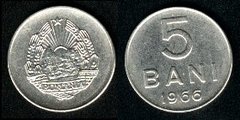
Romania | 5 bani
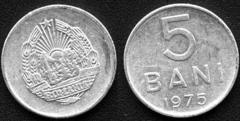
Romania | 15 bani
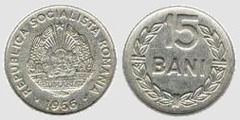
Romania | 15 bani
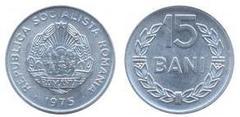
Romania | 25 bani
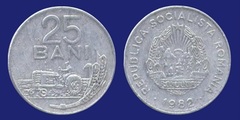
Romania | 5 lei
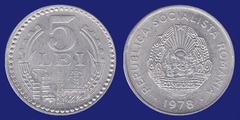
Romania | 10 lei (Anniversary of the Revolution)
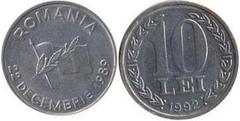
Romania | 20 lei
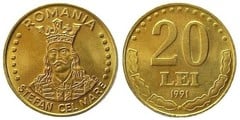
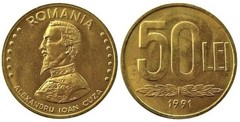
Romania | 50 lei
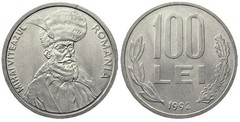
Romania | 100 lei
The most valuable and popular coins
The most valuable Socialist Republic (1966-1992) coins and sought after by collectors according to Foronum statistics are the following:

Historical information
The Socialist Republic of Romania, established in 1965 and dissolved in 1989, was a significant period in the country's history that was also reflected in its monetary system. During this time, Romania experienced political, economic and social changes under the communist regime, which directly influenced the minting and circulation of its coins.
The monetary system under the Ceaușescu regime.
Under the leadership of Nicolae Ceaușescu, who ruled from 1965 to 1989, Romania maintained the leu as its official currency. During this period, several series of coins were issued reflecting the socialist ideology and personality cult of the leader. Coins of this era often featured communist symbols, such as the hammer and sickle, as well as portraits of Ceaușescu on the higher denominations. The coin series introduced in 1966 included denominations of 5, 15 and 25 bani in aluminum, and 1 and 3 lei in nickel-brass, all with the coat of arms of the Socialist Republic of Romania on the reverse.
Transition and monetary changes post-1989
Following the Romanian Revolution of 1989 and the fall of the communist regime, Romania's monetary system entered a period of transition. Between 1990 and 1992, new coins were introduced to reflect the country's political change. These new issues gradually eliminated communist symbols and references to the former regime. One notable series was that of 1991, which included 1-, 5-, 10- and 20-lei coins made of nickel-coated steel. These coins featured Romania' s new coat of arms and designs celebrating Romanian culture and history, marking the beginning of a new era in the country's numismatics. The full monetary transition was consolidated in 1992 with the introduction of a new leu, reflecting Romania's political and economic transformation to a market democracy.